Get 15% Off All Your Translation & Interpretation Orders*

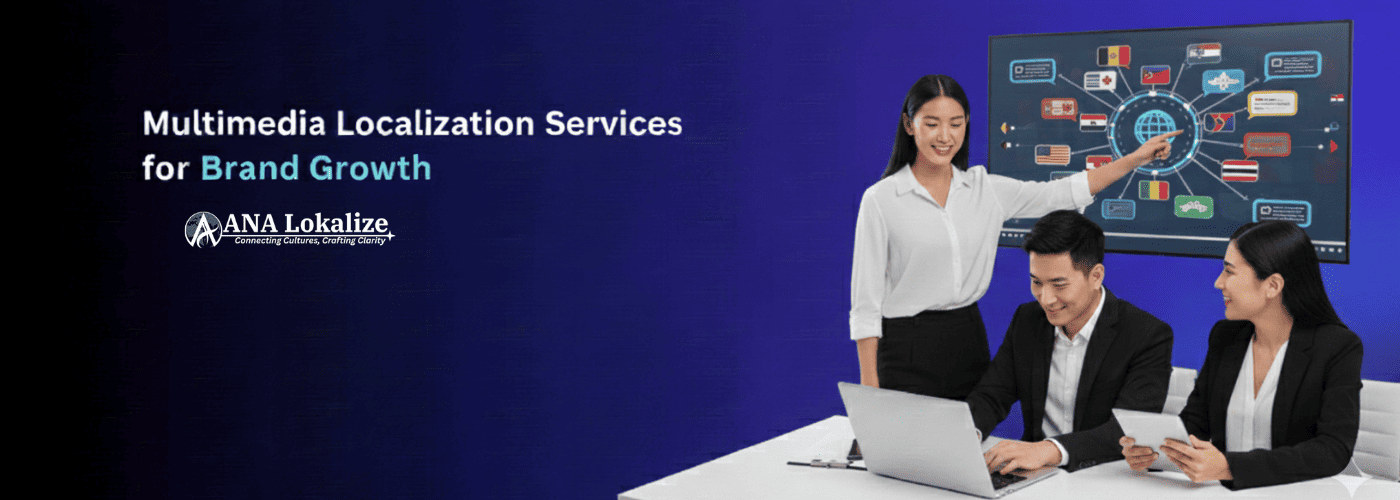
Why Multimedia Localization Services Are Becoming Essential for Brand Growth

Stephane B. Atangana
December 19, 2025
7 min read
66 views
Why Multimedia Localization Services Are Becoming Essential for Brand Growth

Introduction

As the world becomes more connected, brands are no longer limited to one region or one audience. Every video, tutorial, advertisement, and piece of digital content you create today has the potential to reach people living thousands of miles away. But your message will only make an impact when people truly understand and relate to it.

This is where Multimedia Localization Services plays a powerful role.

It helps brands communicate with global audiences in a meaningful, culturally relevant way. Companies like Analokalize are making it easier for businesses of all sizes to transform their content for different languages and cultures without losing originality or quality.

This article explains why multimedia localization matters today, how it supports long-term growth, and why brands need to adopt it if they want to stay competitive in the future.

What Is Multimedia Localization?

Multimedia localization is the process of adapting various forms of digital content—such as videos, audio, animations, graphics, training materials, and apps—so they match the language and cultural expectations of different audiences.

It’s not just about translating text.
True localization involves:

  • Adjusting the tone of voice

  • Changing visuals or icons that may not be culturally appropriate

  • Rewriting scripts for clarity

  • Adding subtitles or captions

  • Recording new voice-overs

  • Modifying on-screen graphics

  • Ensuring the entire experience feels natural to the audience

When done correctly, the localized version feels like it was originally created for that specific region.

Why Multimedia Localization Is Now Essential for Brands

1. Audiences Prefer Content in Their Own Language

People connect better with content when it speaks their language.
A product video or tutorial may be excellent, but if viewers struggle to understand it, they will quickly lose interest.

Localized multimedia content allows brands to:

  • Keep viewers engaged

  • Deliver information clearly

  • Build emotional connection

  • Reduce confusion or miscommunication

In today’s world where people prefer videos and interactive visuals, giving them content in their own language becomes a strong advantage.

2. Helps Brands Expand Into New Countries Easily

If a company wants to enter new markets—whether in Asia, Europe, the Middle East, Africa, or America—Multimedia Localization Services in usa makes the entry smoother and faster.

Instead of creating new content from scratch, brands can:

  • Reuse existing videos

  • Adapt current training materials

  • Transform marketing campaigns

  • Modify product walk-throughs

  • Convert customer support videos

  • Translate website visuals and animations

This saves both time and money.
Analokalize helps brands localize large volumes of content efficiently, allowing them to launch in new regions with confidence.

3. Builds Trust and Credibility

People trust brands that make an effort to speak to them in their own language.
Localization shows that a company respects its audience’s culture, communication style, and expectations.

When customers see:

  • Product demos in their language

  • Customer support videos that they understand

  • Marketing messages that feel relevant

  • Tutorials that are clear and friendly

They develop stronger trust in the brand.
This trust leads to better customer satisfaction, loyalty, and long-term engagement.

4. Greatly Improves Communication Quality

Even the best products can fail in a new market if the audience does not fully understand how to use them.
Miscommunication can result in:

  • Incorrect usage

  • Customer frustration

  • Higher support requests

  • Negative reviews

  • Lower adoption rates

Localized multimedia ensures that the brand delivers the correct message, instructions, and explanations in every region.
This reduces errors and improves the overall user experience.

5. Strengthens Online Presence and Visibility

Today, people are consuming more videos than ever before—on YouTube, Instagram, LinkedIn, TikTok, and educational platforms.
When brands localize their videos into multiple languages, their global visibility increases naturally.

Localized content allows brands to:

  • Reach new viewers

  • Increase video watch time

  • Build active communities in different regions

  • Present a stronger international presence

Analokalize helps brands create versions of their multimedia content tailored for specific countries so that each audience feels directly addressed.

6. Essential for eLearning, SaaS, and Corporate Training

More businesses are global now, which means employees, clients, and learners come from diverse backgrounds.
In this environment, multimedia localization is crucial for:

  • Employee onboarding

  • Training videos

  • Safety instructions

  • Product tutorials

  • Learning modules

  • Corporate communication

When training content is localized, learners grasp information faster and more effectively. This results in:

  • Better skill development

  • Improved job performance

  • Higher productivity

  • Lower learning errors

Analokalize works with global companies to provide multilingual eLearning materials that fit the cultural and educational standards of each region.

7. Enhances Customer Experience

A great customer experience is one where the brand anticipates the audience’s needs.
When customers watch a product demo or troubleshooting video in their language, they feel supported.

Localization enhances the customer journey:

  • Before purchase (ads, promotional videos)

  • During purchase (product explanation videos)

  • After purchase (tutorials, FAQs, installation guides)

A smooth experience leads to fewer returns and higher satisfaction levels.

8. Gives Brands a Competitive Advantage

In many industries, companies are still ignoring the power of multimedia localization.
This creates a huge opportunity.

A brand that offers:

  • Localized advertising

  • Multilingual product demos

  • Culturally adapted training

  • Region-specific marketing campaigns

…stands out immediately.

Customers naturally prefer brands that make communication easier, and this directly boosts brand reputation.

By adopting multimedia localization early, companies gain a long-term competitive advantage.

How Analokalize Supports Multimedia Localization

Analokalize specializes in helping businesses localize different forms of multimedia content with a combination of advanced tools and expert human review.

Analokalize offers:

Analokalize ensures:

  • Cultural accuracy

  • Clear communication

  • Brand consistency across languages

  • High-quality multimedia output

  • Fast delivery for large projects

This makes Analokalize a trusted partner for brands that want to scale globally while maintaining strong content quality.

Future of Multimedia Localization

The future is becoming more global and more digital.
In the coming years, demand for multimedia localization will continue to grow due to:

  • Growth of online video consumption

  • Rise of AI tools

  • Global streaming platforms

  • International eLearning systems

  • Cross-border business collaboration

  • Increase in remote work

  • Expansion of global user bases

Brands that adapt now will be the ones leading tomorrow.

Conclusion

Multimedia localization is no longer just an optional add-on—it is a powerful tool that helps brands connect with global audiences in meaningful ways.
It helps companies grow, expand, build trust, and deliver better customer experiences.

With the support of expert service providers like Analokalize, brands can transform their content into culturally appropriate, clear, and engaging multimedia that resonates with people worldwide.

Frequently Asked Questions (FAQs)

1. What are multimedia localization services?

Multimedia localization services adapt videos, audio, graphics, and digital content to different languages and cultures so they feel natural to local audiences.

2. How is multimedia localization different from translation?

Translation changes text, while localization adapts language, visuals, tone, and cultural elements for a complete local experience.

3. Why is multimedia localization important for brand growth?

It helps brands reach global audiences, build trust, improve engagement, and expand into new markets effectively.

4. How does localization improve customer engagement?

Localized content is easier to understand, more relatable, and keeps viewers interested for longer.

5. Which industries benefit from multimedia localization?

eLearning, SaaS, corporate training, technology, marketing, and global businesses benefit the most.

6. Does multimedia localization help enter new markets?

Yes, it allows brands to reuse existing content and adapt it quickly for different regions.

7. How does multimedia localization build trust?

Speaking the audience’s language and respecting culture makes brands feel reliable and customer-focused.

8. Is multimedia localization important for training content?

Yes, localized training improves understanding, performance, and learning outcomes.

9. How does multimedia localization improve online visibility?

Multilingual videos and content reach wider audiences and perform better on global platforms.

10. What services does Analokalize provide?
Analokalize offers video translation, subtitling, voice-over, dubbing, eLearning, and multimedia localization services.


Stephane B. Atangana

Professional translation and localization experts with 10 years of experience in helping businesses connect with global audiences.

Share this article:

Search Articles

Subscribe to Our Newsletter

Get the latest translation insights and industry news delivered to your inbox.

We respect your privacy. Unsubscribe at any time.

Chat with us